Tire Pressure
The right tire pressure and the right amount of sealant give you comfort, grip, low rolling resistance and puncture protection.
How our tires are set up
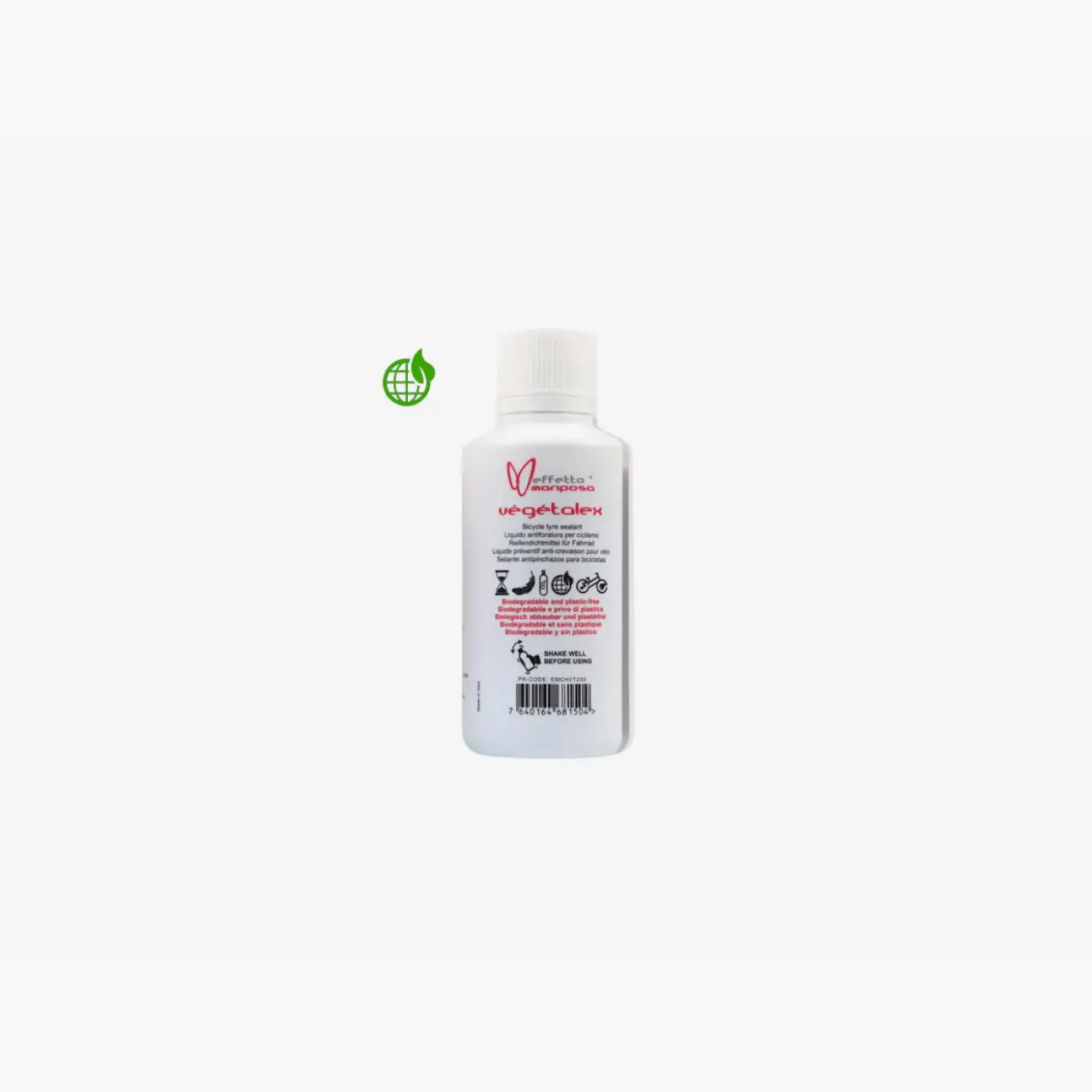
Section titled “How our tires are set up”- Tubeless setups: our tubeless-ready tires are set up with Effetto Mariposa Végétalex, a plant-based liquid sealant that seals small punctures by itself. Check the sealant level, and top it up if needed, every 3 to 6 months.
- Tubed setups: tires that run with an inner tube are fitted with lightweight TPU (thermoplastic polyurethane) inner tubes. TPU tubes have lower rolling resistance and better pinch-flat protection than traditional butyl tubes. They need no sealant.
If you are not sure which setup your bike has, contact us.
Pressure and sealant by tire
Section titled “Pressure and sealant by tire”700C / 28” wheels
Section titled “700C / 28” wheels”- Schwalbe One Performance RaceGuard TLE (622x28 mm), tubeless-ready
- Recommended pressure: 4.5–6.0 bar (65–87 PSI)
- Maximum pressure: 6.5 bar (95 PSI)
- Sealant: 30–40 ml per tire
- Schwalbe Pro One TLE (622x28 mm), tubeless-ready
- Recommended pressure: 4.0–5.5 bar (58–80 PSI)
- Maximum pressure: 6.5 bar (95 PSI)
- Sealant: 30–40 ml per tire
- Schwalbe G-One Speed (622x35 mm), tubeless-ready
- Recommended pressure: 3.0–4.2 bar (43–60 PSI)
- Maximum pressure: 5.0 bar (70 PSI)
- Sealant: 40–50 ml per tire
- Schwalbe Marathon Efficiency (622x35 mm), with inner tube
- Recommended pressure: 3.5–5.0 bar (50–70 PSI)
- Maximum pressure: 5.5 bar (80 PSI)
- Inner tube: TPU inner tube (no sealant)
- Schwalbe G-One RS (622x35 mm), tubeless-ready
- Recommended pressure: 2.8–4.0 bar (40–58 PSI)
- Maximum pressure: 4.5 bar (65 PSI)
- Sealant: 40–50 ml per tire
- Schwalbe G-One R (622x40 mm), tubeless-ready
- Recommended pressure: 2.5–3.5 bar (36–50 PSI)
- Maximum pressure: 4.5 bar (65 PSI)
- Sealant: 50–60 ml per tire
- Schwalbe G-One Allround (622x40 mm), tubeless-ready
- Recommended pressure: 2.5–3.5 bar (36–50 PSI)
- Maximum pressure: 4.5 bar (65 PSI)
- Sealant: 50–60 ml per tire
- Schwalbe G-One R (622x45 mm), tubeless-ready
- Recommended pressure: 2.0–3.0 bar (29–43 PSI)
- Maximum pressure: 4.0 bar (55 PSI)
- Sealant: 60–70 ml per tire
- Schwalbe G-One RS (622x45 mm), tubeless-ready
- Recommended pressure: 2.0–3.0 bar (29–43 PSI)
- Maximum pressure: 4.0 bar (55 PSI)
- Sealant: 60–70 ml per tire
650B / 27.5” wheels
Section titled “650B / 27.5” wheels”- Schwalbe G-One Speed (584x50 mm), tubeless-ready
- Recommended pressure: 2.0–3.0 bar (29–43 PSI)
- Maximum pressure: 4.0 bar (55 PSI)
- Sealant: 60–80 ml per tire
- Schwalbe G-One Bite (584x54 mm), tubeless-ready
- Recommended pressure: 1.8–2.8 bar (26–40 PSI)
- Maximum pressure: 4.0 bar (55 PSI)
- Sealant: 70–90 ml per tire
Fine-tuning the pressure
Section titled “Fine-tuning the pressure”- Rider and total weight: lighter riders should aim for the lower end of the recommended range for more comfort and grip. Heavier riders and fully loaded bikepacking setups should ride toward the upper end, but never above the maximum.
- Terrain: when you move from smooth asphalt to loose gravel, sand or forest trails, lower the pressure by about 0.2–0.4 bar for a larger contact patch and more traction, staying within the recommended range.
- New tubeless tire: when fitting a new tire, use sealant toward the upper end of the range for that tire, so it coats the inside of the casing and the bead properly.
Tubeless care
Section titled “Tubeless care”- Check the pressure before every ride. Tubeless tires naturally lose a little air over time, more than tires with inner tubes.
- Check the sealant every 3 to 6 months. Sealant dries out over time. Check the level at least twice a year and top it up if it is low.
- Tires are wear parts. Check the tread and sidewalls regularly for heavy wear, deep cuts or perished rubber.
If a tubeless tire keeps losing air
Section titled “If a tubeless tire keeps losing air”- Top up the sealant first. In most cases continuous air loss simply means the sealant is low or has dried out. Fresh sealant added through the valve usually seals small, slow leaks straight away.
- Find the leak. If more sealant does not help, find where the air escapes:
- Mix water with a few drops of washing-up liquid.
- Apply the soapy water along the bead (where the tire meets the rim), at the rim joint and around the valve.
- Look for growing bubbles: they show you where the leak is.
- Check the valve. Make sure the valve core is screwed in tightly.
If you cannot find the leak, or the tire still loses air, contact us.
About the sealant: Effetto Mariposa Végétalex
Section titled “About the sealant: Effetto Mariposa Végétalex”- How it works: unlike traditional polymer sealants, Végétalex uses natural particles, including finely ground olive stones and cellulose fibers held together by xanthan gum.
- How long it lasts: it stays liquid in the tire and does not form a rubbery lump. Even so, check it every 3 to 6 months as described above.
What pressure should I use in my tires?
Find your exact tire in the table on this page and start within its recommended range: lighter riders toward the lower end, heavier riders and loaded bikes toward the upper end, and a little lower on loose gravel. Never go above the maximum pressure, and the maximum printed on the tire sidewall always applies.
My tubeless tire keeps losing pressure. What should I do?
First top up the sealant: it dries out over a few months, and without fresh sealant small leaks do not close. If the tire still loses air, find the leak with soapy water along the bead, the rim joint and the valve, and check that the valve core is tight. If you cannot find or fix the leak, contact us.